Adopting CNC technology in the machining process is a revolutionary improvement in modern machining history. The CNC lathe machine brings outstanding efficiency, consistency, and precision to the manufacturing industry. Besides the benefits it brings, understanding the key parts of a CNC lathe is also important.

In this comprehensive guide, we will introduce the key parts of a CNC lathe and what roles they play in the machining process, helping you gain a deeper understanding of how they work together to deliver precise, stable, and reliable results throughout the machining process.
Before exploring the key parts of CNC lathe machines, it is important to understand their fundamental concept within the machining process. A CNC lathe machine is designed to remove material automatically to get the final output. It is a precision machine tool that incorporates CNC (Computer Numerical Control) technology. The technology utilizes computer programs to control the movement and tool paths of the machine, creating an automated workflow that ensures exceptional accuracy, repeatability, and production efficiency.
Let's take a closer look at how a CNC lathe works. The process begins when engineers create a detailed 3D model of the desired part, which is then converted into machine-readable code that defines the machining paths. Before moving into full production, a dry run, which is a test operation without a workpiece, is typically performed to verify the program and identify any potential issues. Once the setup is confirmed, the CNC lathe begins machining. The cutting tool follows the programmed paths with high precision to shape the material into its final form. Afterward, the finished part undergoes post-processing, such as polishing or coating. It ensures a smooth surface finish and professional appearance.
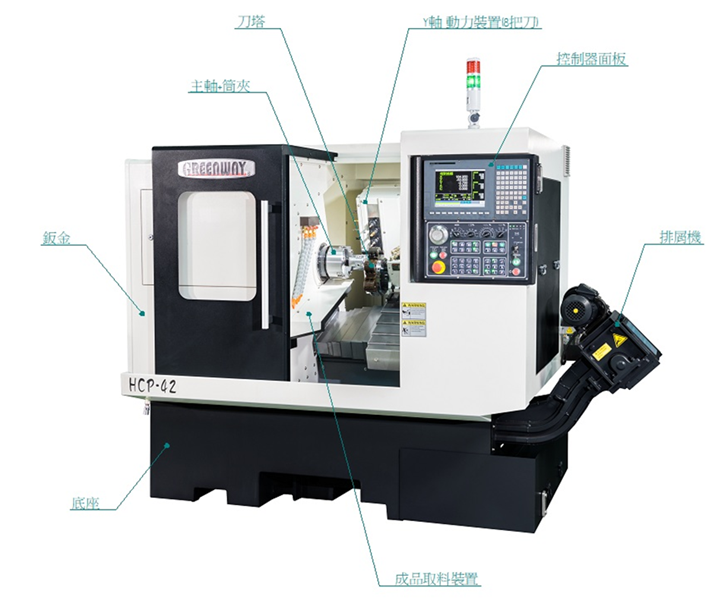
To gain a deeper understanding of CNC lathe parts, we will introduce the key components and their functions within the machining process below:
CNC Control Panel
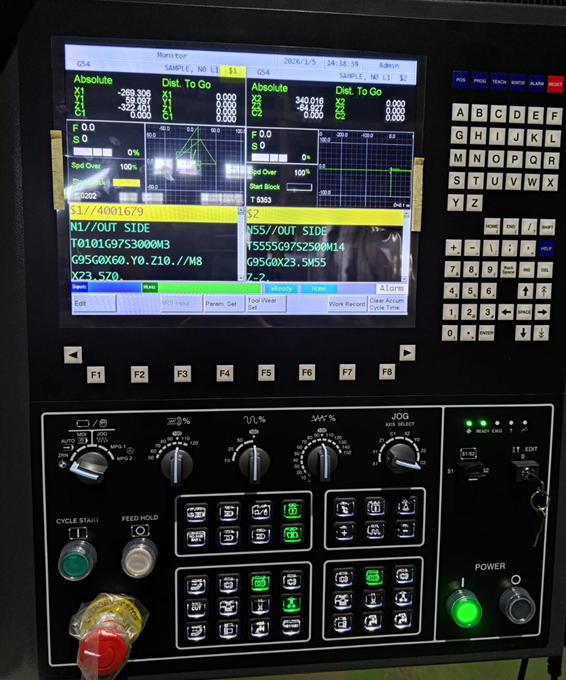
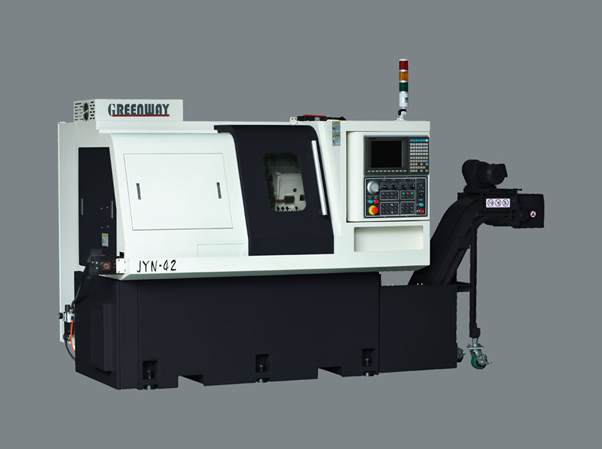
The control panel is the interface for operating and monitoring the CNC lathe machine. It allows the operator to input the code, preview operations, and monitor the machining path. The panel serves as the command center of the CNC lathe machine, providing a comprehensive insight into the machining process. On the CNC control panel, the operator can achieve a precise workflow with consistent quality control.
Headstock
The headstock contains the main spindle, motor, and speed change gear. It supports and rotates the workpiece, providing stable power to the spindle while machining. Nowadays, headstocks offer a wide range of spindle speeds, allowing operators to select suitable spindle speeds while machining different workpieces. This selection of speeds helps the machine handle workpieces with various features, providing great versatility in the production line.
Main spindle
The main spindle delivers the force from the drive motor to the workpieces or the cutting tool, causing them to rotate at high speeds and enabling turning, drilling, and other machining operations. The quality of the main spindle has a significant impact on the machining stability and precision. As a result, choosing a robust and stable main spindle allows for consistent and precise machining.

Clamping mechanism: Chunk or Collet
The clamping mechanism in the lathe is installed on the main spindle, which includes the chuck and collet. These components are used for clamping the workpieces, ensuring they are firmly in place during the machining process. The chuck is suitable for securing workpieces with a wide range of sizes and shapes, providing reliable versatility. On the other hand, the collet is typically used for securing small-sized workpieces that require high precision machining.
Tooling system: Turret type or Gang type
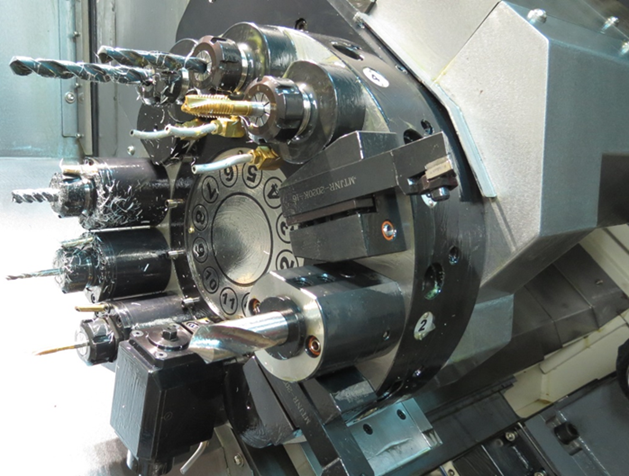
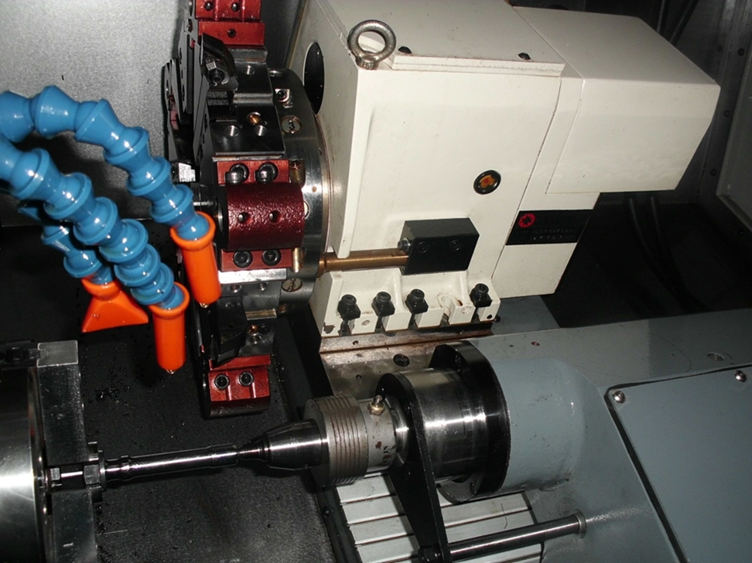
The tooling system plays a vital role in the machining process, as it is installed with cutting tools that shape the workpieces to the desired shapes. The CNC lathe machines have two types of tooling systems, the turret type and the gang type. The turret type supports rotative tool change, which is beneficial for demanding requirements with multiple processes. As for the gang type, the tools are arranged in a linear configuration, featuring rapid tool changing.

Tailstock
On the other side of the chuck is where the tailstock landed. It serves as an additional support for the workpiece while machining. With the reinforcement it provides, the tailstock can prevent long workpieces, such as tubes and rods, from being unstable and deformed during the machining process, which offers superior precision and product quality.
Sub spindle
In certain models of CNC lathe machines, the sub-spindle is designed to replace the tailstock. The sub spindle clamps the other side of the workpiece, allowing the cutting tools to conduct backside machining. This automated feature reduces the need for manual material handling, achieving efficient working processes.
Carriage
The carriage is an essential part of the CNC lathe machine, allowing it to perform accurate positioning and machining during the process. It supports the cutting tools to move through the X and Z axes. This dual-axis system enables the CNC lathe to perform complex machining tasks that demand high precision and consistency. Thus, the carriage's ability to accurately position the cutting tools significantly improves the overall precision of the machining process.
Lathe bed
The CNC lathe bed serves as the structural foundation of the machine. It securely supports other lathe components, such as the headstock, tooling system, and guide rail. The durability and rigidity of the lathe bed help absorb vibration during the machining process, improving the machining stability and product quality.

After exploring the key components of the CNC lathe, it becomes clear that each part plays a critical role in achieving precise and efficient machining quality. The adoption of CNC technology allows these components to operate automatically with minimal manual intervention, significantly enhancing machining efficiency, consistency, and product quality.
If you are seeking to optimize production performance, GREENWAY's CNC lathe machine series delivers exceptional accuracy, reliability, and durability with the consistency of high-quality parts. Contact us today to learn how our advanced CNC solutions can improve your machining processes.